I got a new set of computer speakers recently and decided to hook them up using the digital audio input. Because my computer doesn’t have an optical output, coax was the way (in fact, I had to make my own flylead to break out the motherboard’s S/PDIF header to an RCA plug – more on that another time).
It may come as a surprise to some, but there is absolutely no difference in audio quality between optical and coax – use whichever you have the I/O and cable for. Digital is digital, and even the highest bitrate multichannel audio is not that demanding (though recent home theatre HD audio formats like DTS-HD and Dolby Atmos don’t support S/PDIF coax or optical – I suspect this is likely a copy protection/DRM requirement rather than a technical one).
S/PDIF is designed to use 75 ohm coax, as used for video (composite, component, SDI, etc), TV antennas, cable TV, HFC internet, etc. It generally uses RCA connectors for convenience, unlike the professional version (AES-EBU), which uses the much more appropriate and impedance-matched BNC connector.
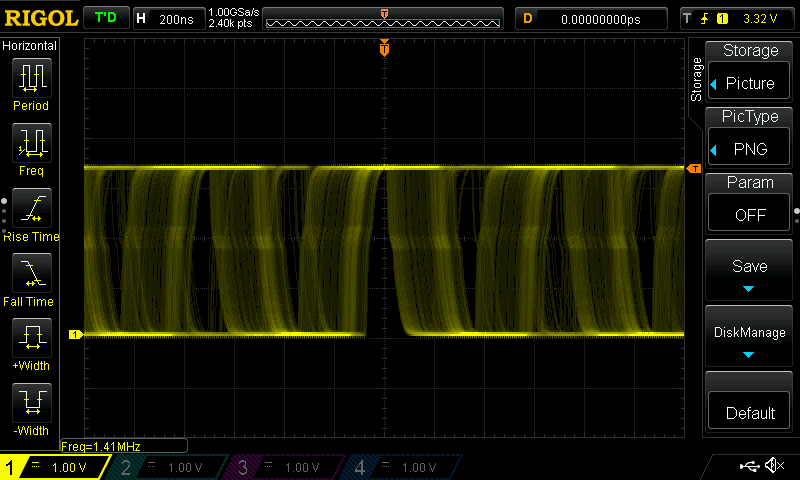
So anyway, I hooked up the speakers using a cheap cable I had lying around, and they didn’t work. Spoiler – it’s because I had selected the wrong input – but that didn’t stop me from actually investigating the impact of the cable – which was almost certainly not 75 ohm coax!
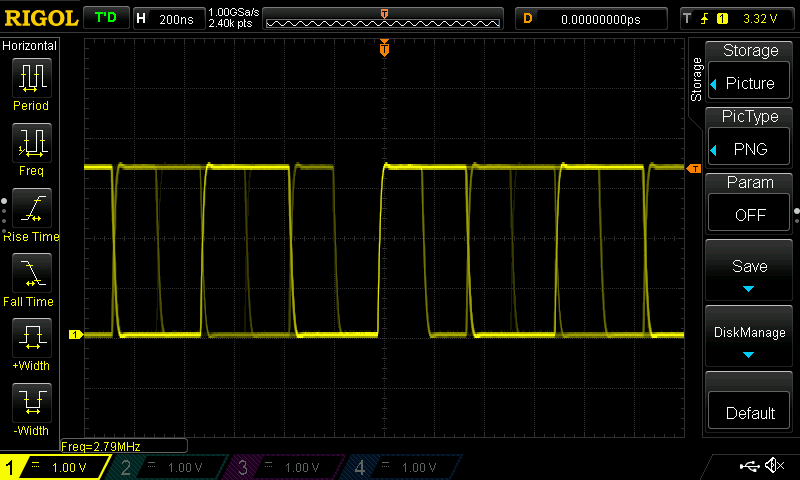
So it certainly appears that sending the signal through even a short length of poor cable has a significant impact on the signal. I don’t know a lot about electronics operating at these frequencies, but I’m pretty sure blurry = bad. It wasn’t long after this I realised I had my speakers set to optical input rather than coax, and it turned out they work perfectly even with such a distorted signal.
I’ll have to do some more investigation with a better quality cable, but I find it quite interesting that the decoder doesn’t seem bothered as it is! It certainly explains why “any old cable” is such a common option for S/PDIF. A great question to be answered is “what’s the limit?”. To be continued…
 Evan's Notes